
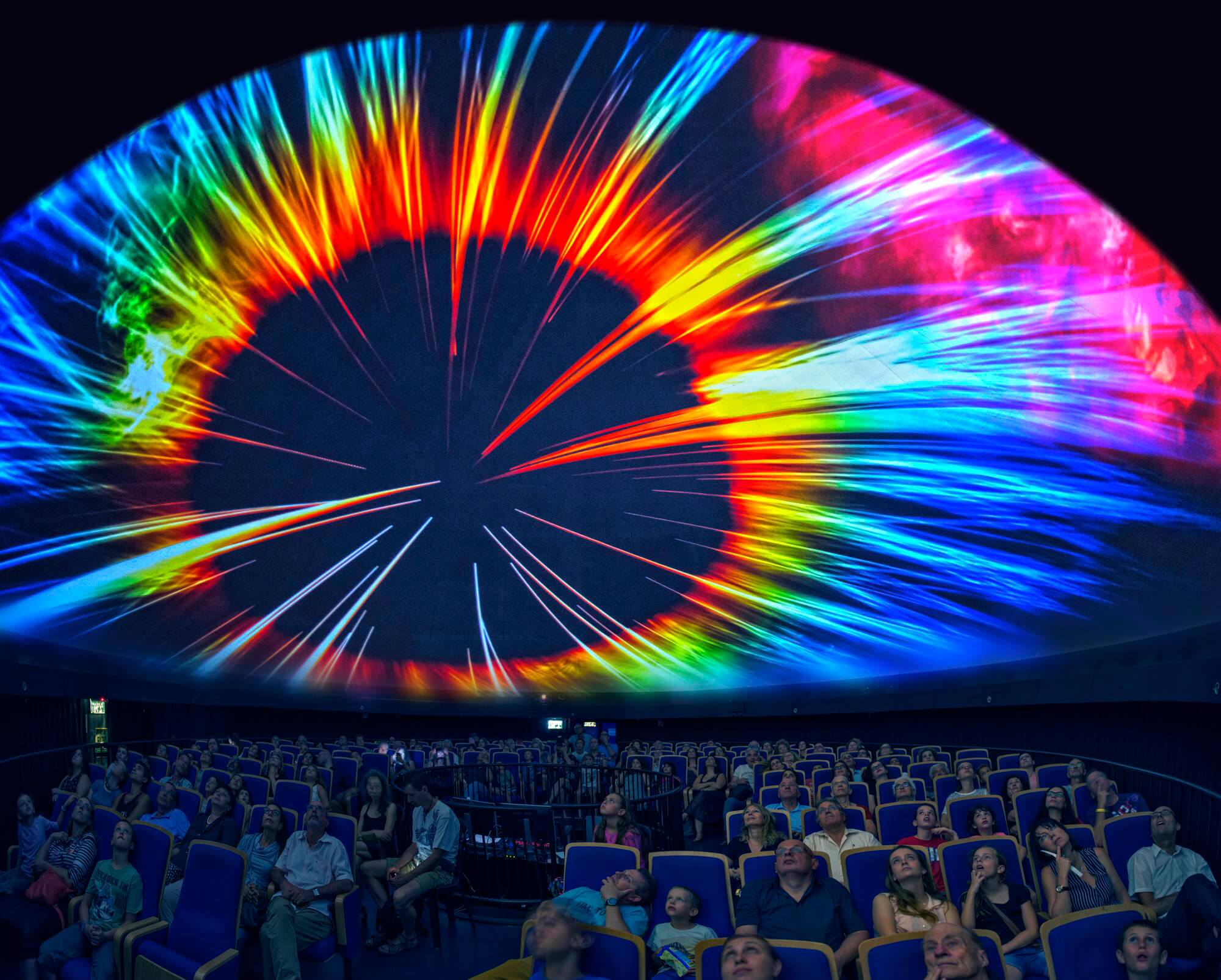
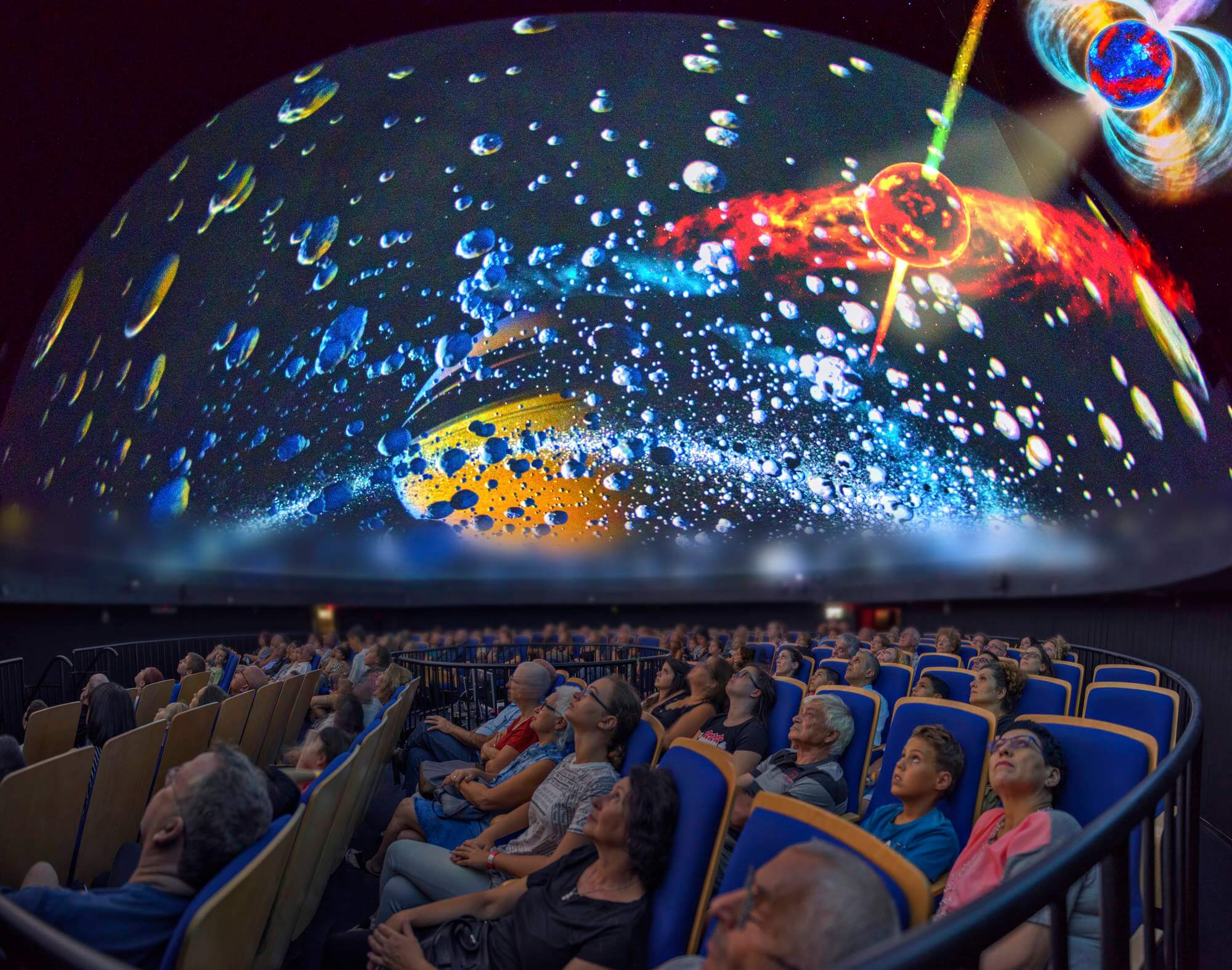
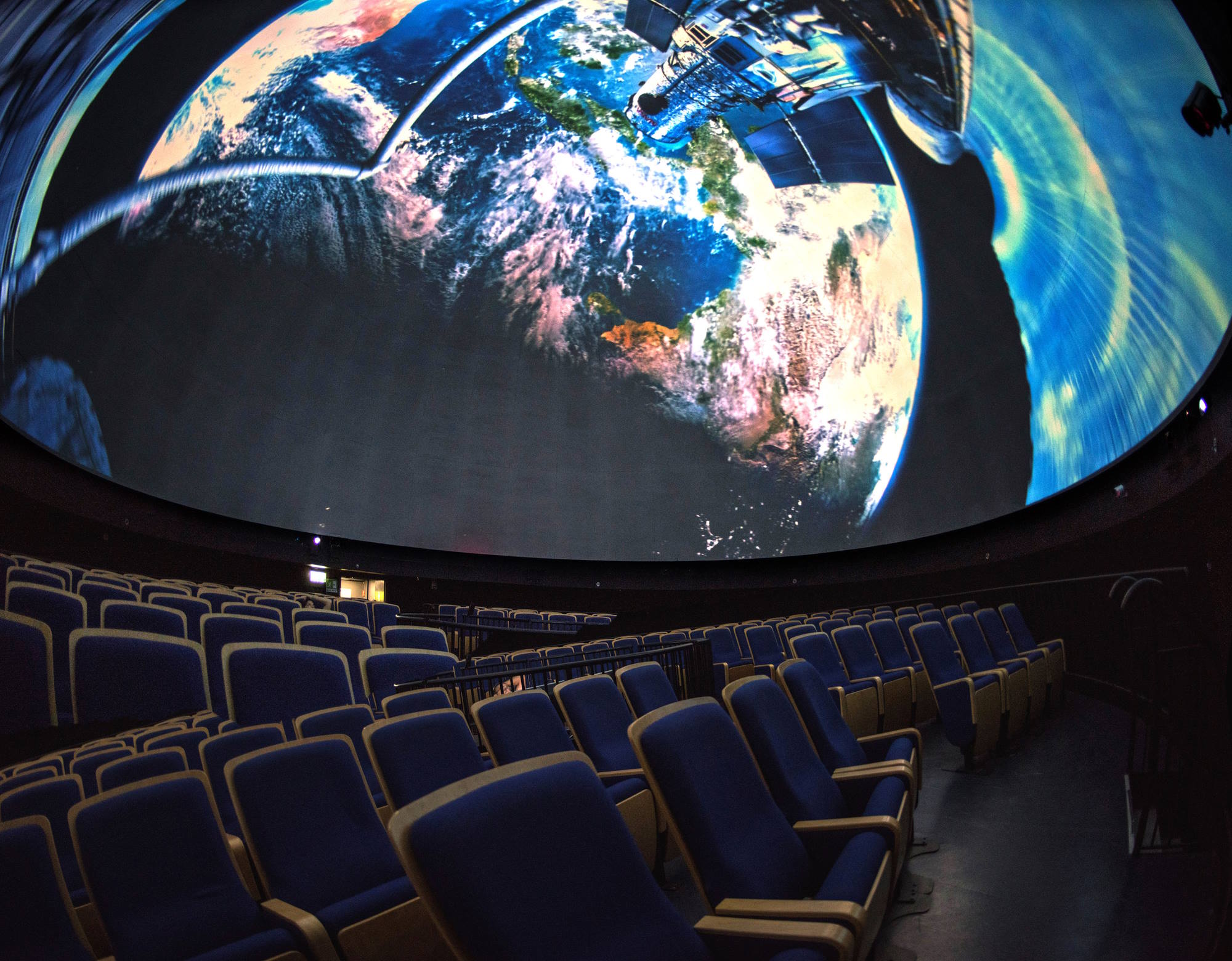
The wonders of the universe in the center of Tel Aviv!
Discover how stars live and die, why Galileo changed astronomy, and what astronauts do in training sessions.
A selection of shows for a range of ages that will take you to galaxies far away and back again, without getting out of your seat.
General Information
Please note: Entrance to the Planetarium requires purchasing a museum entrance ticket!
- Shows in English are available by prior arrangement (provision of shows in English is conditional on a minimum number of participants) – for more information contact the Education Wing’s reservation center
- Group visits are available by prior arrangement via the Education Wing’s reservation center
- The planetarium is accessible to the visually impaired and disabled visitors in wheelchairs
- Due to technical issues, the planetarium shows are not currently accessible with subtitles for the hard of hearing
Opening Hours
Open on Saturdays
Stars (Hebrew): 11:00 | 13:00
Astronaut (Hebrew): 12:00 | 14:00
Tow Small Pieces of Glass (Hebrew): 15:00
The Shows
Stars
Set out on a voyage across the infinite universe, between distant galaxies and billions of stars of every type and kind, ever changing as they live, die, and are reborn. A gripping show that tells the story of the most ancient stars and those yet to be born. Discover the beauty and destructiveness of the universe we live in.
Recommended for ages 5 and above
Astronaut
Do you dream of taking off for space? Start training! Space travel is not only a huge technological challenge, it is no less challenging physically. Astronauts have to be in excellent physical condition to handle the extreme stresses of space flight, and become accustomed to weightless conditions. Discover how astronauts train for space flight and what special equipment NASA uses for their training.
Recommended for ages 5 and above
Tow Small Pieces of Glass
People have always watched the stars, but nobody did it like Galileo! Galileo improved the telescope (which was invented in the Netherlands by lens grinders making eyeglasses), and used it for systematic observations of the stars. His discoveries and drawings caused a revolution in the perception and understanding of space that is still in effect today. Come and see the wonders of the universe as revealed by the telescope lens, in a show that will introduce you to the world of the Italian thinker and scientist, living over 400 years ago, who made the telescope what it is today.
Recommended for ages 7 and above