
מוז"א, מוזיאון ארץ־ישראל, תל־אביב שמח להכריז על תרומה משמעותית ונדיבה מטעם 60 אמניות ואמנים ישראלים שהשתתפו בשתי תערוכות הביאנלה לאומנויות ולעיצוב שהתקיימו במוז"א, מוזיאון ארץ־ישראל, תל־אביב בשנים 2020 ו-2023, ביניהם משה רואס, אבנר שר, פריד אבו שקרה, יעל עצמוני, ענת נגב ואסתי דרורי, נועה בן-נון מלמד ועוד.
בניית אוסף הקראפט והעיצוב העכשוויים של מוז"א משקף את המאמץ והשאיפה של המוזיאון לקדם ולטפח שדות יצירה אלה בישראל. לצד תערוכות ביאנלה ותערוכות רחבות היקף המתמקדות בתחומי יצירה אלה, העשרת האוסף בעבודות חדשות ועדכונו, מאפשרים את צמיחתו המתמדת תוך ייצוג מנעד רחב של קולות, גישות ואופני ביטוי.
מגוון העבודות שנתרמו לאוסף כולל יצירות שנעשו בעבודת יד עמלנית מחד וכאלה המשלבות טכנולוגיות מתקדמות מאידך, והוא כולל אובייקטים פיסוליים, פריטי עיצוב ומיצבים מותאמי־חלל. היוצרות והיוצרים שמאחוריהן מגיעים מרקעים שונים ומצויים בשלבים שונים בדרכם האמנותית. ביניהם שמות בולטים כגון פריד אבו שקרה, יעל עצמוני, טל בטית, אסתר בק, נועה בן־נון מלמד, סופי ברזון מקאי, דילן בראמס, נועם דובר ומיכל צדרבאום, נעמה שטיינבוק ועידן פרידמן (סטודיו Reddish), רוית לצר, ערן לדרמן, לוקה אור, גלית ונדב ראוכוורגר, משה רואס, אבנר שר ועוד רבים אחרים.
עמי כץ, מנכ"ל מוז"א: "אנו מבקשים להודות לכל התורמות והתורמים. תרומות אלו מסייעות ומניעות את מאמצנו המתמשך לתעד, לשמר, ולאצור את התפתחותן של שדות יצירה דינמיים אלו בישראל ולקדם את השיח סביבם. אוסף מוז"א הוא אחד הגדולים בארץ בקראפט, והעבודות שנתרמו מעשירות אותו ומוסיפות לו רבדים חדשים"
האמנים/ות התורמים/ות
פריד אבו שקרה / אביטל אביטל / נעמה אגסי / אליאונורה אורלי אדלביץ׳ / מאירה אונא / לוקה אור / אלינה אורלוב / מיכאלה מיקה אורסתיו / שיר אתר / טל בטיט / נועה בן־נון מלמד / אסתר בק / דילן בראמס / סופי ברזון מקאי / אולה ברנר / גנית גולדשטיין / מיכל גמליאלי / אופיר גרדי (קבוצת אנטרופיה) / נועם דובר / אסתי דרורי / יסמין וינוגרד / ליאורה זונשיין / נעם זונשיין / אבנר זינגר / אופיר זמודזיאק / רונן ימין / זהר ירום (קבוצת אנטרופיה) / שקד כהן אילן / אוריאל ח' כספי / אריאל לאביאן / אפולו לגיסמו / ערן לדרמן / רוית לצר / שירן מגריסו / דקלה מוסקוביץ / דבורה מורג / ענת נגב / פוגי נעים / רחל סטולר / קובי סיבוני / עדן סעדון מלין / גלית עינב / יעל עצמוני / נועה פיין / קטיה איזבל פילמוס / רובין פנטופרו / אנה רות פקטורוביץ / עידן פרידמן (סטודיו רדיש) / מיכל צדרבאום / דניה צ׳למינסקי / אילה צור / ד״ר עמית צורן / יבגניה קירשטיין / גלית ראוכוורגר / נדב ראוכוורגר / משה רואס / דפי רייס דורון / נעמה שטיינבוק (סטודיו רדיש) / מיכל שקנאי יעקובי / אבנר שר / אלי שרגא (קבוצת אנטרופיה)
מבין העבודות
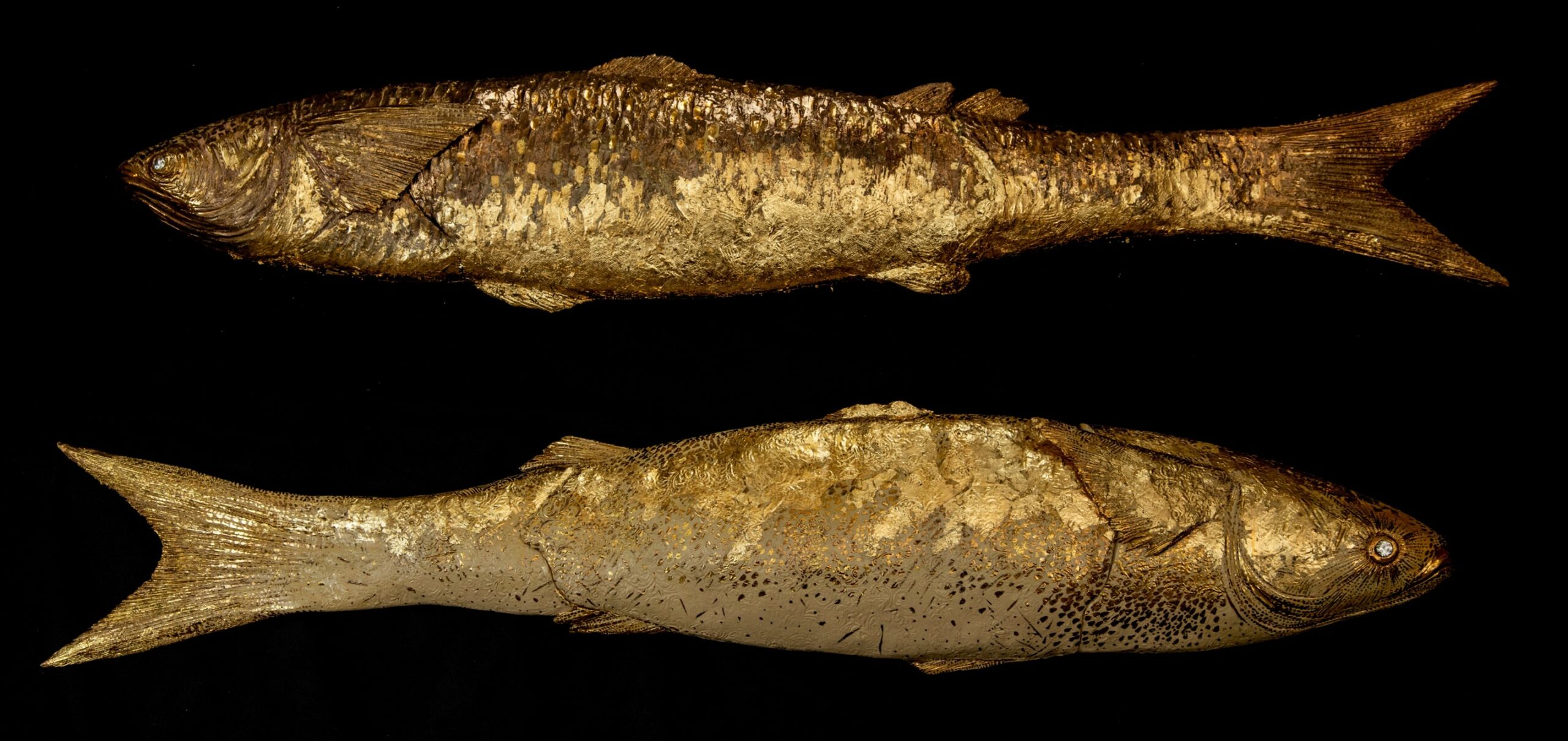
דגי זהב, 2022, רחל סטולר
בעבודתה דגי זהב רחל סטולר בוחרת בדימוי עתיר סמלים ומשמעויות, שמקורו במסורות עתיקות, ומעניקה לו פרשנויות חדשות הקשורות לתודעה עצמית ורוחניות. סטולר חורגת ממוסר ההשכל העומד בבסיס האגדה הקלאסית "הדייג ודג הזהב" ונוגעת בסוגיות של הגשמה עצמית והגשמת משאלות, והקשר בין המודע והתת מודע. מידותיהם המונומנטליות של הדגים ושחייתם לכיוונים נגדיים מגלמים דואליות זו.
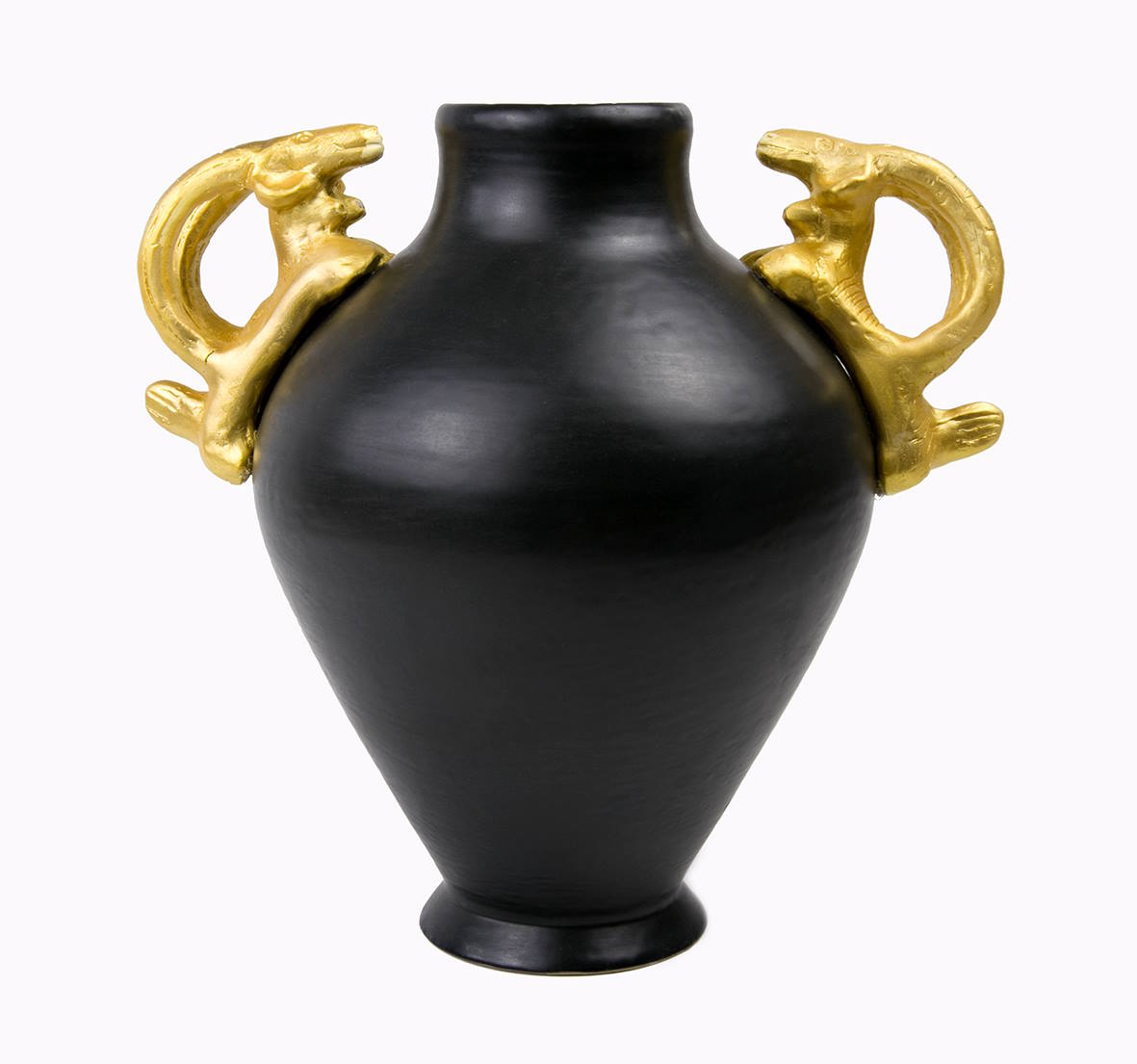
זהב שחור, 2020, אסתי דרורי וענת נגב
באמצעות בחינה טיפולוגית של קדרות קלאסית, איסוף פרטי פיסול אתיופי, יצירת תבניות, פיסול ידני של הפריטים ותרגומם לשפה עיצובית עכשווית, אסתי דרורי וענת נגב מנסות להחיות ולשמר תרבויות וטכניקות עבר ומסורות שהולכות ונעלמות, במטרה להשיב אל השיח העכשווי קולות העומדים בפני הכחדה. דרורי ונגב דנות בחיבורים בין סוגי מדיה שונים, אמנותיים ותרבותיים, חומרים "גבוהים" ל"נמוכים", בגישה עיצובית עכשווית שמבקשת לגשר בין עבר לעתיד.
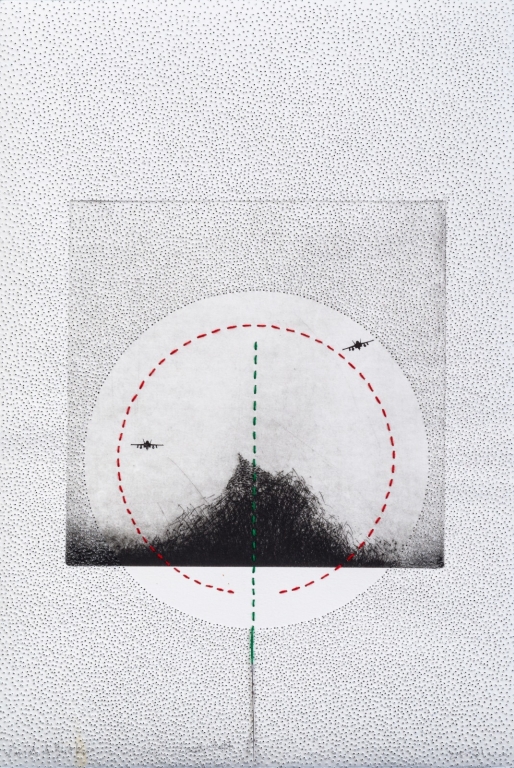
הקו הירוק, 2017, פריד אבו שקרה
בסדרת עבודות רקמה על תחריטים פריד אבו שקרה יוצר מפגש בין קצוות ומשלב דימויי מלחמה עם יוני שלום ומוטיבים של טבע. תצלומי קרבות ממבצע "צוק איתן" ורקמה מסורתית פלסטינית משולבים בפעולה עמלנית שבה אבו שקרה מחורר, רוקם ומחבר בין דימויי קרב וכלי נשק, המזוהים עם כוחנות גברית, לעבודת מחט אורנמנטלית, המזוהה כמלאכה נשית, ובכך מנכיח מציאות מקומית עתירת רבדים וניגודים.
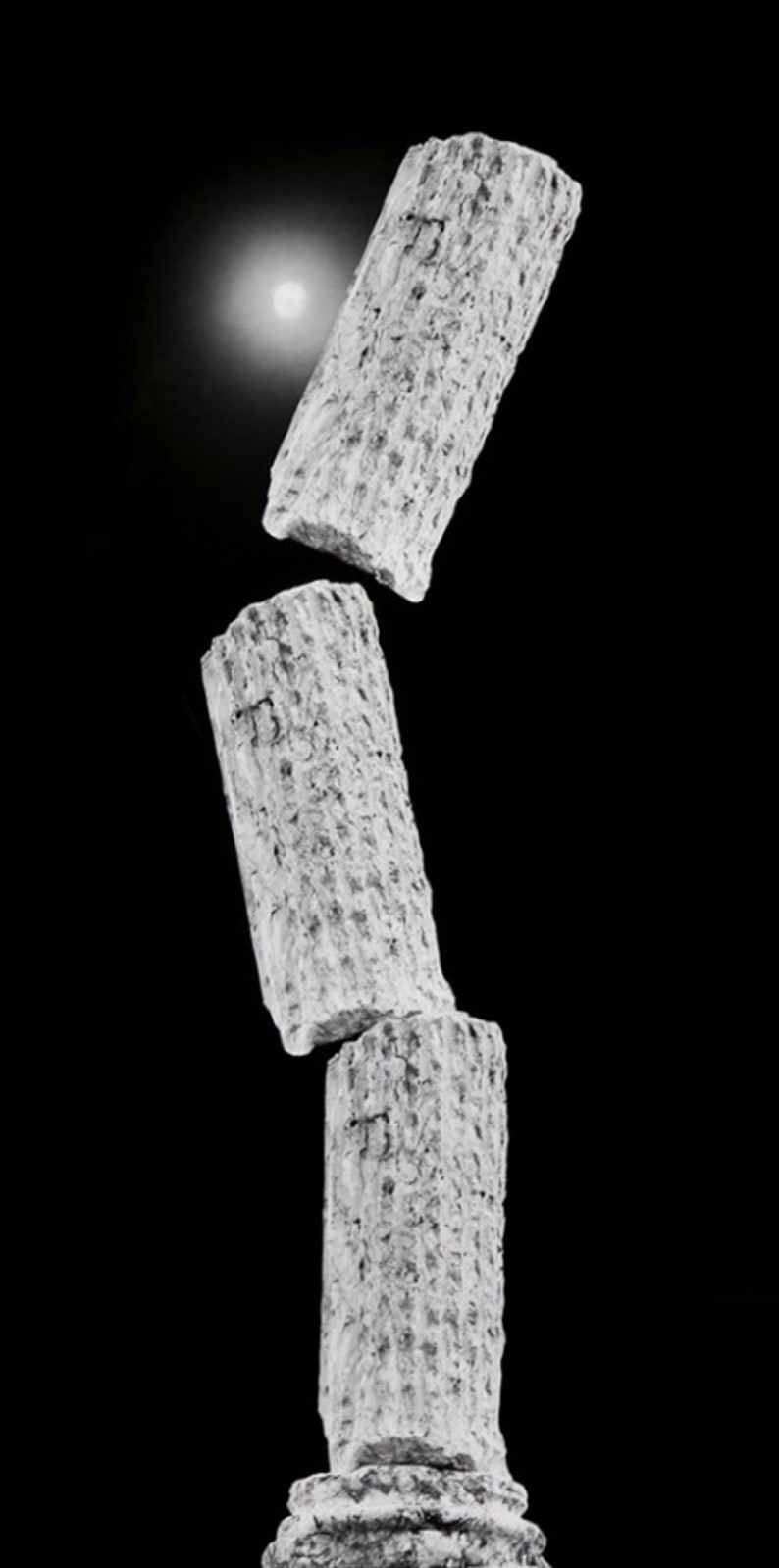
ארכאוגרפיה, נעה בן נון מלמד, 2020
אלמנטים אדריכליים שהוצאו מתצלומים של שרידים ארכאולוגיים ושל תצורות סלעים מהנוף המקומי שימשו חומר גלם למיצב זה. בתהליך של קיטוע, שכפול, היפוך, שינוי גודל וקנה מידה ובנייה מחדש יצרה נועה בן-נון מלמד "פסלים צילומיים". הדימויים המופיעים בתצלומים מאזכרים אובייקטים פולחניים שמתקיימים במרחב הפיקטיבי של הצילום המטופל, אף שהם יוצרים אשליה של אותנטיות, תוך שמירה על חומריותם המקורית. בניגוד לפיסול, מהלך זה בורא עולם מדומיין ובו בזמן הוא מאפשר התבוננות בתהליכי בליה ושינוי באמצעות כלים דיגיטליים.
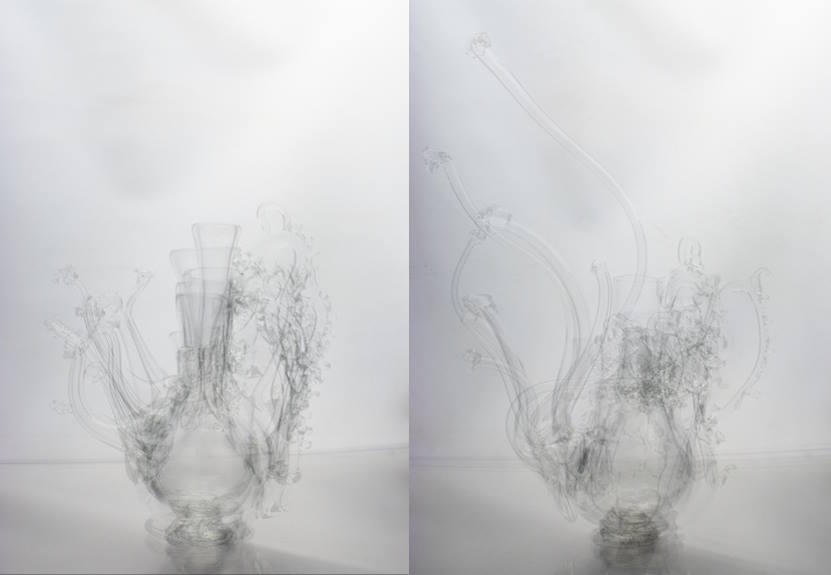
זכוכית, הדפס צילומי; ניפוח חופשי, מניפולציה דיגיטלית
מתוך פרויקט אמפולינה, 2004, דילן בראמס
ב-15 השנים האחרונות דילן בראמס מתעד את התוצרים של תרגוליו החוזרים ביצירת "אמפולינה" – כלי זכוכית מסורתי מורכב לביצוע שהכנתו היא חלק מתהליך ההכשרה של מנפחי זכוכית באי מוראנו – בדומה למוזיקאי שמתרגל סולמות. פרויקט אמפולינה כולל עד כה חמישים תצלומים דיגיטליים מטופלים שמתעדים 370 ניסיונות – צילום על גבי צילום. הפרויקט מתחקה אחר התפתחותו של בראמס ב"אילוף" החומר התובעני באמצעות אובייקט בודד, ממחיש את התהליך הארוך לרכישת מיומנות זו ומפאר את מלאכת היד, תוך העלמת האובייקט עצמו.
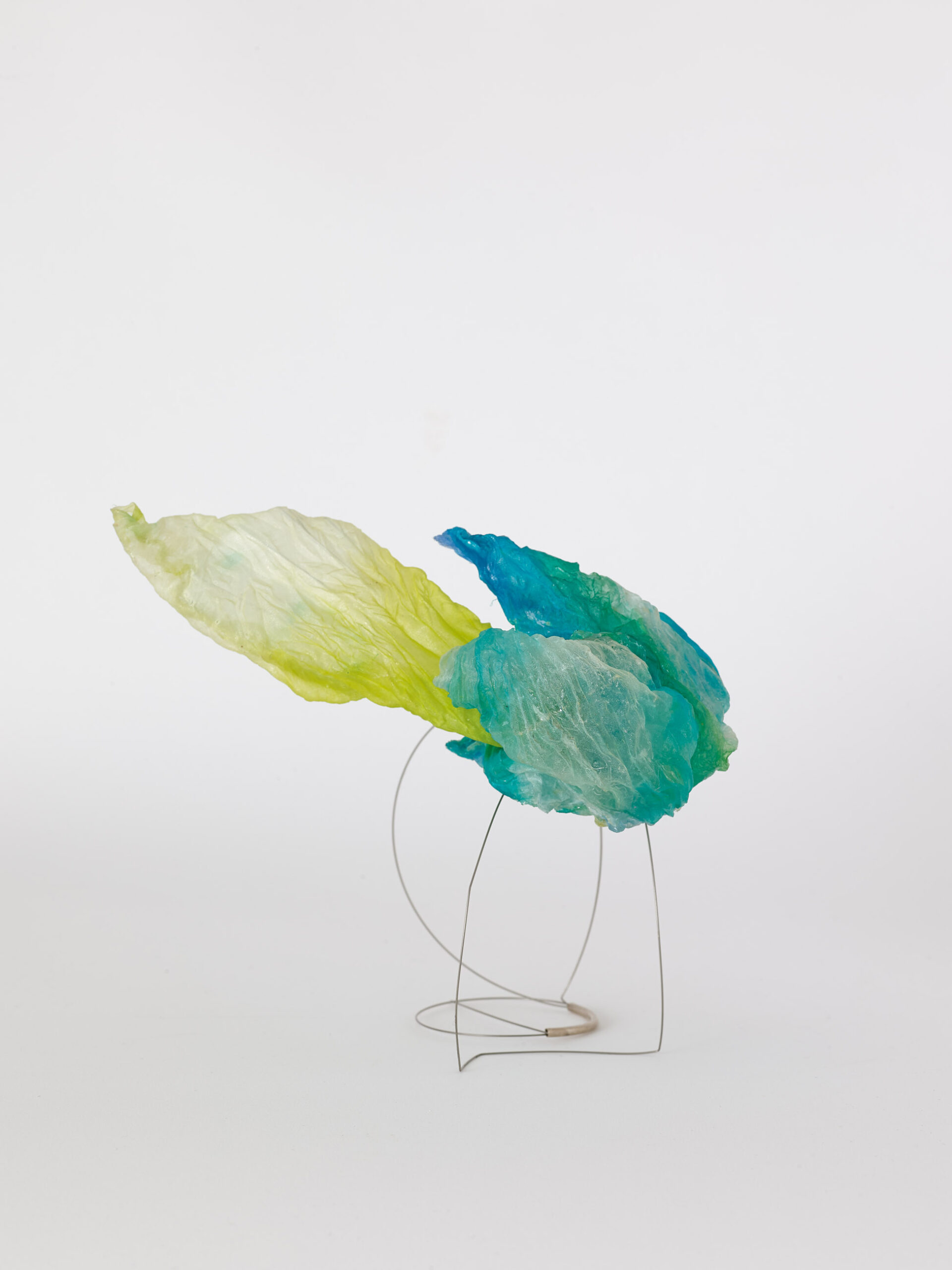
שמורת הטבע הפרטית שלי, 2021, יסמין וינוגרד
אהבתה לטבע ועיסוקה באובדן של סביבות חיים תת ימיות הקיימות כבר מיליוני שנים הובילו את יסמין וינוגרד ליצור את סדרת הסיכות שמורת הטבע הפרטית שלי, המורכבת מצורות צפות בדמות יצורים תת ימיים. בהשראת צבעיהם הבוהקים ותנועותיהם החושניות, היא השתמשה בבד משי צבוע ביד כדי ליצור צורות אורגניות עדינות ותלת ממדיות. משי הוא חומר שמתקשר באופן מסורתי לעושר, מלכותיות ומותרות, וייצורו כולל התערבות אנושית לצד תהליכים טבעיים. השימוש בו מדגיש את מערכת היחסים המורכבת בין בני האדם לטבע, ואת הצורך ביצירת איזון בין השניים.
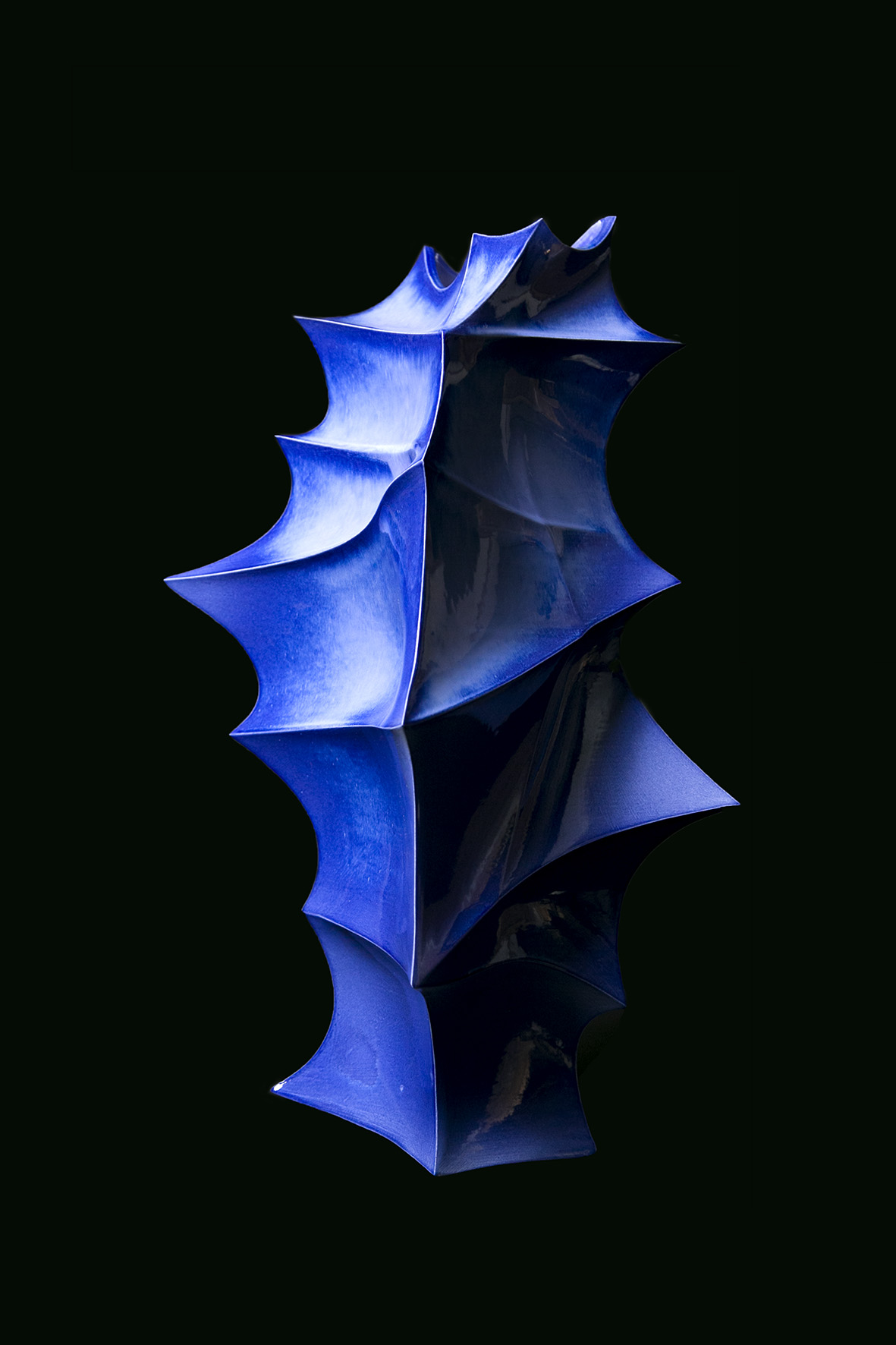
מתוך הסדרה Lanceolate, אופיר זמודזיאק
אופיר זמודזיאק בוחן מחדש צורות של כלי עבודה פרהיסטוריים שעשויים מאבן צור בהקשר עכשווי ובטכנולוגיה מודרנית. זמודזיאק, בעל רקע בעיצוב קרמיקה וזכוכית, עוסק כאן בשימוש בתהליכים דיגיטליים, מתרחק מתהליכי עבודה מסורתיים ומעניק להם פרשנות מודרנית.
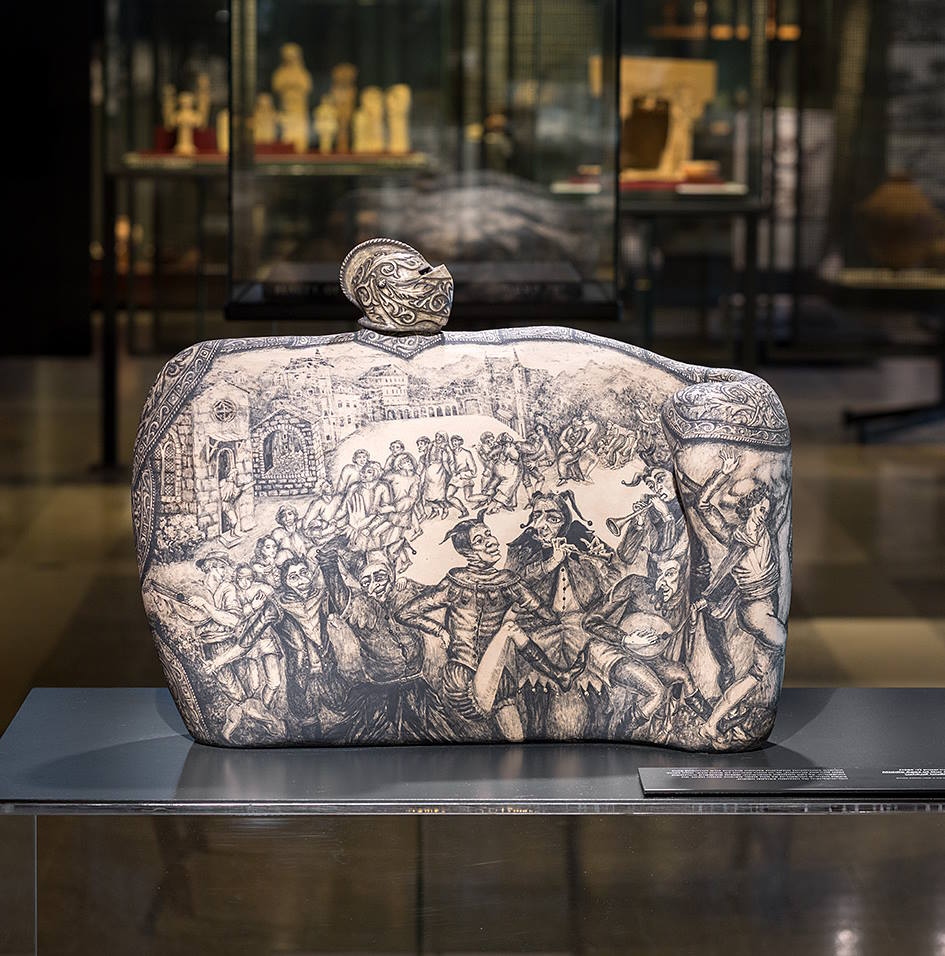
ימי ביניים של ימנו, 2023, יבגניה קירשטיין
מקור ההשראה לעבודתה של יבגניה קירשטיין, ימי הביניים שלנו, הוא תחריט ימי ביניימי של היינריך הונדיוס המבוסס על "ריקוד במולנביק", ציורו של פיטר ברויגל הצעיר. ברויגל היה עד לאחת מהתפרצויות של המגפה המרקדת שהתחוללה ב-1564 בפלנדריה, אז אנשים יצאו לכיכר העיר ורקדו עד מוות. קירשטיין יצרה כלי קרמי שחלקו העליון מעוצב כשריון אביר ובחזיתו מתוארים אנשים רוקדים, הגדלים בהדרגה ויוצאים לקדמת הציור. דמויות עוברות בהדרגה לחלק האחר של האגרטל ונהפכות לחיילים בני זמננו, שרוקדים ומכוונים מקלעים זה כנגד זה. דימוי זה מבוסס על טרנד בטיקטוק שהאבסורדיות שלו הכתה באמנית: קליפים של חיילים רוסים ואוקראינים רוקדים לפני היציאה לקרב. באמצעות שפה אמנותית ודימויים של ימי הביניים, קירשטיין מבקרת את התרבות שלנו שהופכת הכל לבידור או למגמה חולפת.
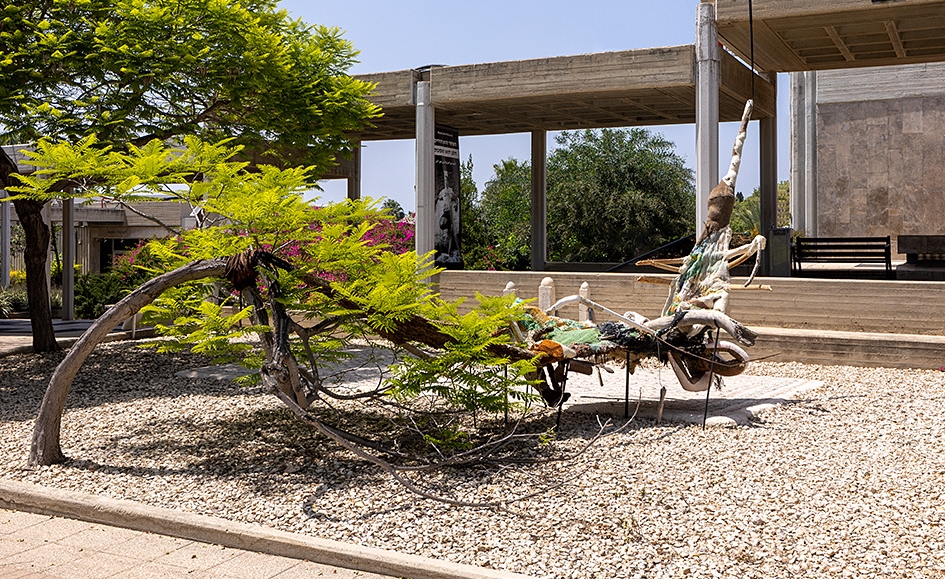
עצים, רשתות, אריגים, מתכות, חלקי פגזים, שלדי בעלי חיים, עור גדי, גידים; טכניקה מעורבת
ללא כותרת (ערסל), 2023, משה רואס
עץ רכון, כמעט ונוגע ברצפת הפסיפס, שריד כנסייה, מהמאה השישית לספירה. משה רואס מתעניין ביחסים בין הפסיפס מהעבר הרחוק, ובין העץ ששורשיו נטועים בהווה וכיוון צמיחתו כלפי מטה, במקום כלפי מעלה. הוא מתערב באותו רגע מפגש עדין באמצעות אובייקט דמוי ערסל עשוי עצים, רשתות, מתכות ובדים – מעין מקום מבודד ומגונן שמאפשר הישרדות או מנוחה. הפסל תלוי באוויר, כאשר צד אחד שלו מחובר לעץ ונוגע בעדינות ברצפת הפסיפס, נכנע לכוח הכבידה.
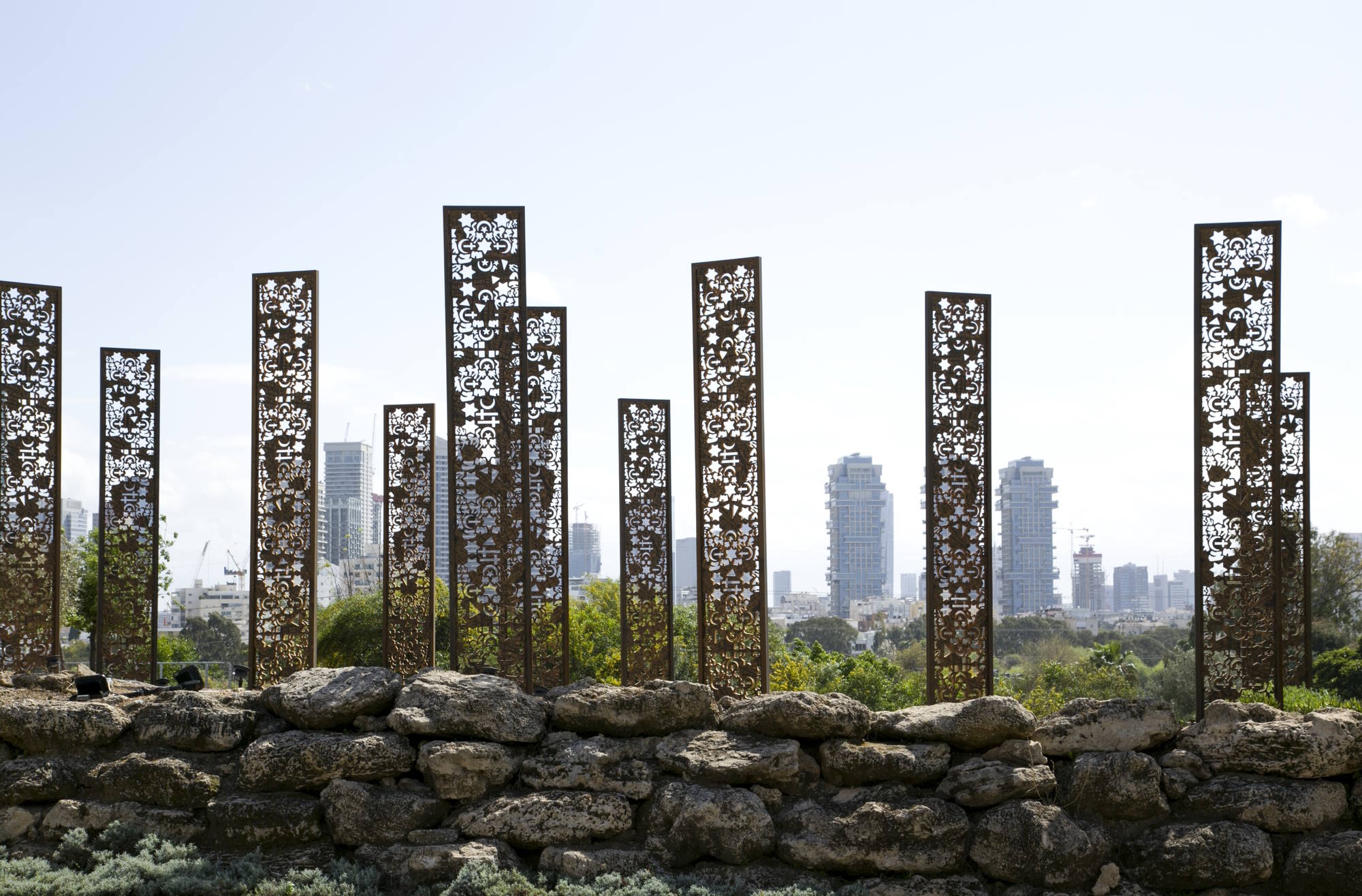
קו רקיע, 2020, אבנר שר
מגדלי השעם של אבנר שר הוקמו בנקודה אסטרטגית בלב המוזיאון, סמוך ליישוב פלישתי קדום (תל קסילה) ולא הרחק ממקומו של הכפר הפלסטיני שיח' מואניס. המגדלים משקיפים אל קו הרקיע של תל אביב, ומתפקדים כעדות דוממת להיסטוריה בת מאות השנים של אתר זה. על משטחי שעם, שמאזכרים משרביות אסלאמיות, הודפסה מפת העיר תל אביב, ש"כורסמה" כמו במגזרת נייר בטכנולוגיה דיגיטלית ליצירת דגמים כגון חצי סהר, צלבים ומגני דויד והיא נחתמת באקט קיצוני כשהיוצר "פוצע" אותה בידיו הוא. בכך הוא מנסח שפה חזותית חוצת תרבויות ומגדיר "אתר" סמלי.
כתבות נוספות
ריאיון עם הצלם ראאד בואיה – מתוך קטלוג התערוכה "השחור הוא החיים, הלבן הוא האמנות" שראה אור לאחרונה. מראיין: גיא רז, אוצר התערוכה
13.03.24
חדש באוסף: תרומת אוסף טננבוים לביתן הזכוכית תרומה משמעותית וחשובה של כ-75 פריטי זכוכית מאוסף רבקה וצבי טננבוים לזכר בנם החלילן ידין טננבוים ז"ל, שנהרג במלחמת יום הכיפורים
25.02.24
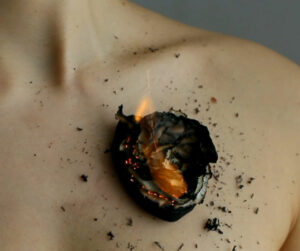
כשהמילים נאלמות שלושה שבועות חלפו מאז הטבח הנורא ביישובי הדרום ומאז פרצה מלחמה. בתוך האלם, מתוך השתיקה, כמה מעבודות הביאנלה נטענות במשמעות חדשה
29.10.23